
Beatport is banning music created entirely or mostly with Artificial Intelligence (AI). The policy responds to a rapid rise in AI uploads, skepticism among the platform’s audience, and unresolved questions about rights. For musicians, video creators, and platform users, a work’s reception increasingly depends not only on how it sounds or looks, but also on how it was made.
What exactly is Beatport changing?
Beatport no longer allows tracks that are wholly or predominantly AI-generated. Music that remains mostly human-made but uses AI as an aid can still be released, although it will receive a label. The platform is therefore not drawing a line between any AI use and no AI use; it is distinguishing human-led creation from extensive automation.
During upload, a detection tool from Beatport partner Beatdapp will analyze submitted music. Beatdapp previously worked on detecting streaming fraud, and its system is now supposed to filter out AI tracks. According to the report on Beatport’s upload policy, rights holders will be notified when a title is rejected.
User attitudes likely contributed to the decision. In a Beatport survey, 60 percent of respondents said they would not play AI music in their sets, while 77 percent preferred music made by people. Only 8 percent were open to AI tracks, with another 13 percent willing to consider them if artists were compensated fairly.
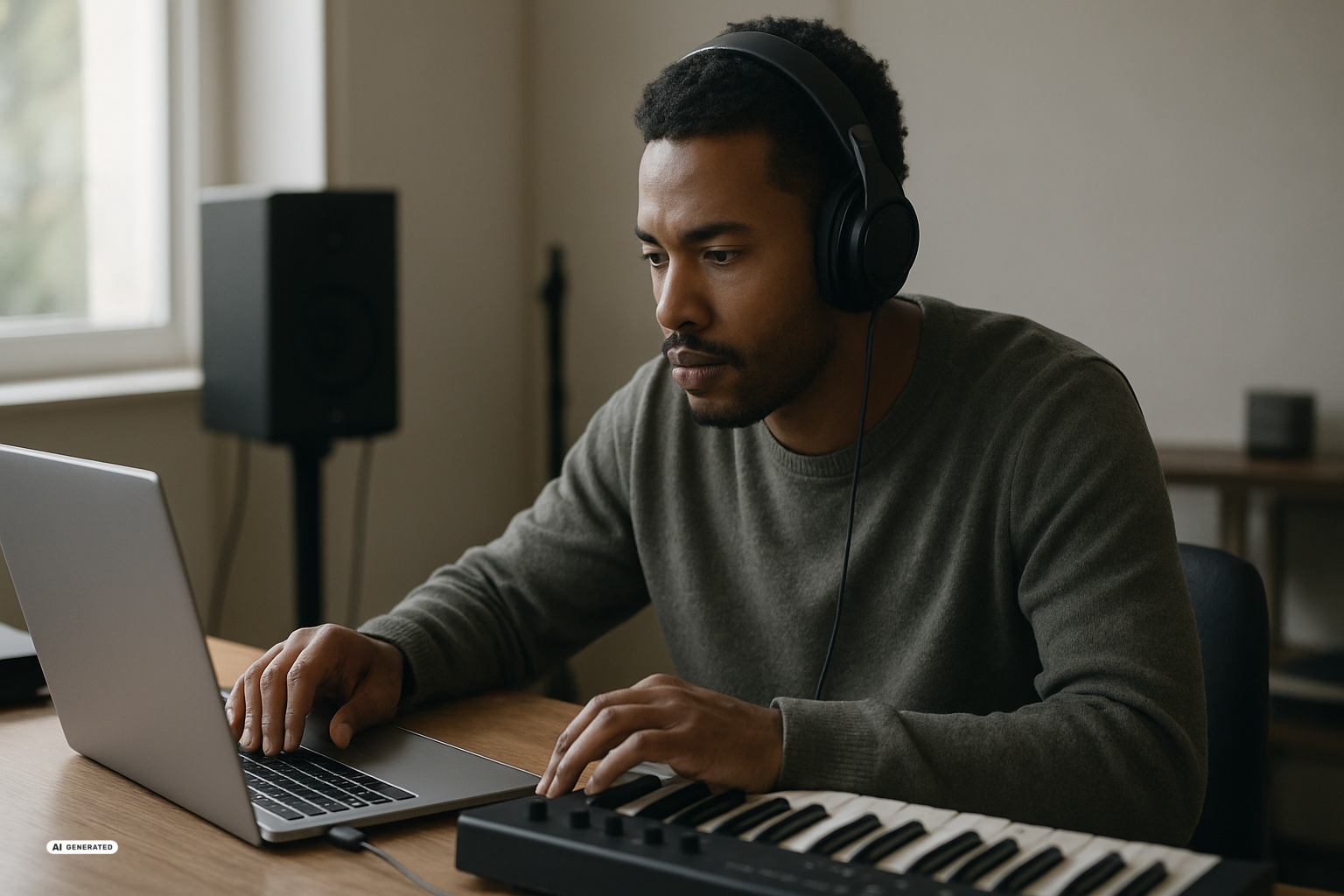
One practical example makes the distinction clearer. If you produce a track yourself and use AI only for limited supporting tasks, Beatport may accept it with an appropriate label. If an AI system generates most of the piece, you should expect the upload to be blocked. How reliably the detection tool can separate those cases remains unknown because the source provides no accuracy figures.
Why is AI content facing more pressure?
The volume of automatically generated material is rising faster than platforms could reasonably review it by hand. Beatport points to measures taken by other services such as Deezer, which said nearly 50 percent of its daily uploads were AI-generated. Automated screening is an understandable response for platforms, although it does not automatically provide the judgment of a human review.
Trust is another factor. Some people disclose their use of AI from the beginning, while others deny it until they face public scrutiny. The Verge describes a growing callout culture in electronic dance music, with musicians investigating and publicly criticizing releases they believe are being misrepresented.
Producer Max “H4RRIS” Harris argues that art emerges from many human choices intended to express an idea or emotion. His position is personal rather than a universally accepted definition of art. It does, however, help explain why undisclosed AI use can be perceived as deception within a professional community, even when a platform does not immediately remove the work.
There is also an economic dispute over who benefits from the works used to train AI models. Sony Music Publishing, Warner Chappell, and other publishers have sued Anthropic and co-founders Dario Amodei and Benjamin Mann. According to the report on the lawsuit, the publishers allege that thousands of copyrighted works were obtained illegally to train the Claude language model.
Anthropic disputes the allegations and says it will defend itself in court. In an earlier case, the company was ordered to pay $1.5 billion, TechCrunch reports: the judge found that using copyrighted works for training was legal, but acquiring them through piracy was not. That creates an important distinction between using material and the method by which it was obtained; the latest lawsuit has not yet been decided.
What do developments in AI video show?
The conflict is not limited to music. In China, AI-generated videos are already replacing human actors, influencers, and livestreamers in some productions. According to the China Netcasting Services Association, about 128,000 short dramas were released in the first quarter of 2026, three times the number published during the entire previous year; 95 percent were reportedly AI-generated.
Cost helps explain the pace. Professor Shen Yang of Tsinghua University says one minute of AI video now costs $90 to $120, or about 10 percent of the former production cost. At the same time, reporting on China’s video industry describes performers being required to transfer their voice and likeness into AI tools before losing their jobs.
This creates a concrete scenario for advertising production. Instead of recording one performer for a series of short videos, a company can generate many versions using a digital actor. According to the reported figures, that can lower production costs, but it also shifts control and income away from the person represented and toward the model operator or production company. Whether the performer consented, and what that consent covers, becomes a central issue.
On the research side, the amount of available material is also expanding. The Big Video Dataset (BVD), a structured collection of training material, contains 1.3 billion video URLs, according to LAION. Researchers downloaded 80 million videos totaling ten million hours and processed them into 55 million clips with automated descriptions and 300 million individual frames.
LAION has released the dataset only for noncommercial research and asks users to respect creators’ rights and copyright. The organization may rely on a 2024 Hamburg Regional Court ruling that permitted its collection of protected material for noncommercial research. The example also shows how training, licensing, and eventual commercial use can be separate questions.
Pros and Cons of stricter platform rules
Pros:
- Greater transparency – Labels help you tell whether a work was mainly created by a person or generated automatically.
- Less content flooding – Upload screening can limit the ability of mass-produced tracks to crowd out human releases.
- Stronger trust – Clear policies make it harder to present undisclosed AI music as entirely human-made work.
- More attention to rights – Platforms and producers have greater reason to check which works, voices, and likenesses were used.
Cons:
- Unclear boundaries – There is considerable room for interpretation between AI assistance and predominantly automated generation.
- Missing performance data – Beatport gives no accuracy rate for its detector, making potential errors difficult to assess.
- Inconsistent policies – One platform may allow a work, another may label it, and a third may reject it.
- Restricted experimentation – Broad bans can also affect creative uses in which people still make the essential decisions.
What does this mean for your releases?
For beginners: Start by recording which AI tools you used for a track or video and which parts you created yourself. Keep the information you have about voices, images, musical works, and consent. Before uploading, read the rules of the specific platform rather than assuming that disclosure will be sufficient everywhere.
Consider an electronic track for which you created the structure, melody, and mix while an AI tool handled one limited supporting task. Under the policy described by Beatport, this mostly human-made production would be more likely to qualify, although it would need an AI-assistance label. A fully generated vocal and instrumental production would probably fall under the ban.
For advanced users: Document your process in greater detail through project versions, saved stages, and traceable records of where source material came from. This does not automatically prove that every right has been cleared, but it can show which creative choices you made. You can also prepare for different distribution requirements, provided each platform’s rules permit the relevant version.
The sources identify no special availability conditions or separate Swiss rules for creators and users in Switzerland. The changes still matter when you use international platforms such as Beatport or produce material for an international market. The US lawsuits and the German ruling involving LAION do not automatically determine how a particular situation would be assessed under Swiss law.
The emerging policies do not reject every use of AI. They primarily target missing disclosure, automated content at scale, and uncertain sourcing. Labels can provide useful context and bans may protect human work, but detection methods and the boundary between a tool and a creator remain unclear. The unresolved risk is that platforms must make binding decisions faster than courts and shared industry standards can settle the underlying rights questions.
Sources
- DJ-Plattform Beatport sperrt KI-generierte Musik und setzt auf automatische Erkennung beim Upload – THE DECODER, 2026-08-28
- Sony Music, Warner sue Anthropic, alleging a “brazen campaign” of intellectual property theft – TechCrunch, 2026-08-29
- KI-generierte Videos ersetzen in China bereits menschliche Schauspieler und Influencer – THE DECODER, 2026-08-29
- Musicians-turned-detectives are hunting for AI grifters – The Verge, 2026-08-29
- Big Video Dataset: LAION stellt zehn Millionen Stunden Videomaterial für offene KI-Forschung bereit – THE DECODER, 2026-08-29