



Apple Intelligence combines new photo, audio, and health features with a promise to keep personal data on your device whenever possible. Artificial Intelligence (AI) will authenticate original images, reconstruct recently spoken words, and estimate a biological age from your health metrics. These changes primarily affect people buying a new iPhone or Apple Watch — as well as anyone who happens to be nearby.
New AI features expand the camera, Watch, and Health app
The most distinctive addition to the iPhone 18 Pro and Pro Max is called Reference Image. In a dedicated camera mode, a new sensor is supposed to digitally sign every pixel it captures. Apple’s Private Cloud Compute, an isolated system for cloud processing, then turns the signed sensor data into what the company describes as an unalterable reference image.
You can compare this reference with other versions of the same picture in the Photos app. If you brighten a press photo, remove a person, or crop the frame, for example, the original signed version should remain available for comparison. The feature does not imply that every unsigned image is fake; it is designed to document what the sensor recorded while Reference mode was active.
This reverses the usual approach of labeling content after it has been generated or edited. Rather than merely flagging a possible AI origin, Apple is building authentication into the camera hardware, according to the report on Reference Image. An application programming interface, a controlled connection that other software can use, may eventually let third-party apps inspect signed images as well.
Reference Image only authenticates pictures deliberately captured in its dedicated mode. Apple lists the iPhone 18 Pro from $1,199 and the Pro Max from $1,299. The overview of Apple’s fall announcements gives September 18, 2026, as the official release date, but it does not provide Swiss pricing.
Audio Intelligence protects data technically, not socially
Apple is bringing Audio Intelligence to the Apple Watch Series 12 and Ultra 4. Its features include Sound Recognition, Siri Recap, and Live Rewind. After you double-press the Digital Crown, Live Rewind can turn the previous 15 seconds into text — useful if you missed the final sentence in a meeting.
Raw audio is supposed to be processed inside a Secure Exclave, a hardware-isolated section of the S11 chip. According to Apple’s description of its audio privacy measures, the live buffer is continuously overwritten, is not saved as a file, and cannot be accessed by the operating system, apps, or Apple. Speech, music, and other sounds are initially detected there without storing the raw audio signal.
If processing needs to move to your iPhone, Apple says the information is encrypted while traveling between the protected sections of both devices. Text from Siri Recap and Live Rewind is synchronized with end-to-end encryption only when you use a device passcode and have enabled two-factor authentication for iCloud. End-to-end encryption means that only the intended devices can read the content.
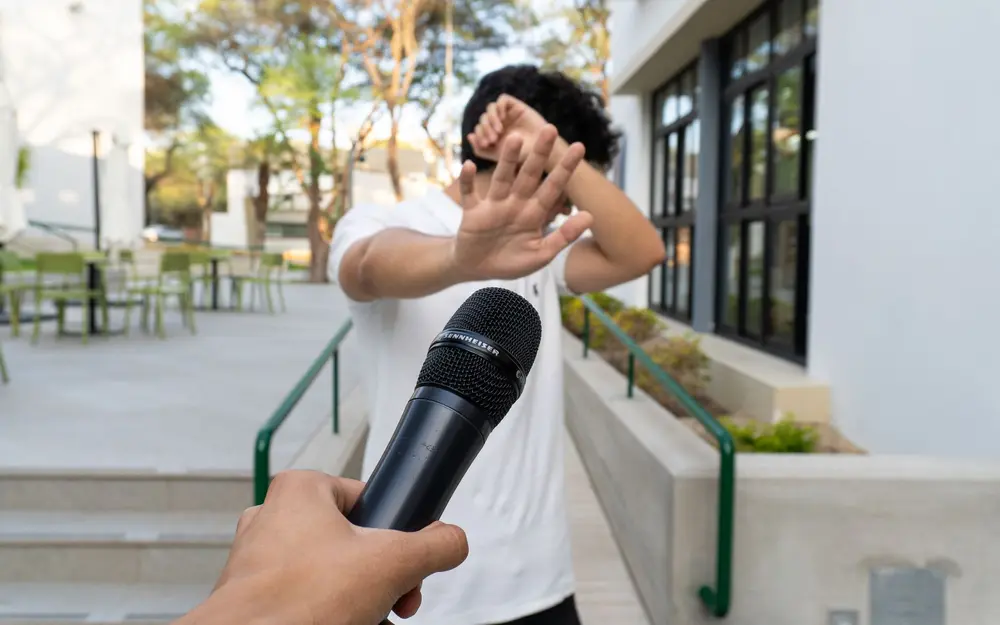
This design restricts technical access to the audio data. It does not resolve the social issue created by a watch continuously analyzing conversations around it. TechCrunch criticizes the normalization of always-listening technology: Even without a stored raw recording, other people may feel uncomfortable or may not realize that their words can be converted into text retroactively.
The case for these tools is stronger for some uses than for others. Sound Recognition can alert deaf or hard-of-hearing wearers to sirens, doorbells, crying babies, and alarms, even when their iPhone is not nearby. Live Rewind and Siri Recap move beyond a focused accessibility function into general convenience, where the consent and expectations of other people become harder to dismiss.
Health summaries make complex measurements easier to read
The redesigned Health app also relies on Apple Intelligence. A new Insights section will summarize timely information and provide personalized guidance. Apple is also adding a readiness score, which estimates how prepared you are for exertion, and Health Age, which compares selected health metrics with your chronological age.
According to the report on the redesigned Health app, Health Age uses measurements including maximum oxygen uptake, sleep data, and other metrics, potentially including blood biomarkers. A new Longevity section combines information about sleep, movement, heart health, and additional factors. Apple also announced a U.S. partnership offering a 50-biomarker blood panel for $119, but no Swiss price or availability was provided.
For an everyday example, the app might suggest adding intervals to your morning run to improve cardiovascular fitness. Movement assessments are also intended to help older people and those recovering from injuries. A trainer can demonstrate movements for you to repeat during an assessment.
These summaries could make dense collections of measurements easier to understand. A single Health Age or readiness score can also suggest a level of precision that cannot be independently assessed from the supplied information. The features are not a medical diagnosis, and the reports provide neither error rates nor evidence of independent clinical validation.
The updated Health app is scheduled to roll out later in 2026, beginning in U.S. English. Apple has not provided a date or list of supported languages for Switzerland. Reference Image’s European Union status does not answer the Swiss availability question either: Apple only says that the feature will not launch with the iPhone 18 Pro lineup in the EU, although users there will be able to develop and view reference images in iOS 27, iPadOS 27, and macOS 27.
Pros and Cons of Apple’s personal AI
Pros:
- Verifiable originals – Reference Image creates a technically signed starting point that can be compared with later edits.
- Local processing – Raw audio is supposed to remain inside isolated hardware instead of becoming a conventional saved recording.
- Practical accessibility – Sound Recognition can alert people with limited hearing to relevant alarms and everyday sounds.
- Clearer health information – Summaries and scores can make measurements from the Watch, iPhone, and laboratory results more accessible.
Cons:
- Continuous sensing – Even an ephemeral audio buffer requires a microphone to process the surrounding environment continuously.
- Missing consent – People near you cannot easily tell whether a Watch is analyzing their words for Live Rewind.
- Provider-dependent trust – The central claims about Secure Exclave, Private Cloud Compute, and unalterable images come from Apple and are not independently verified in the reports.
- Restricted access – Several features depend on new hardware, specific modes, security settings, or initially on U.S. English.
Apple’s new chief executive, John Ternus, presents the iPhone as an “intelligent personal hub”: a device that stays with you, understands personal context, and can run AI both locally and through the cloud. Rather than creating separate AI hardware, Apple wants to connect the iPhone, Watch, apps, and services more closely. In the report on Apple’s AI strategy, Ternus explicitly frames privacy as a distinction between Apple and its competitors.
That position is coherent, but it is not neutral: It comes from the company selling the devices and services. As camera, audio, and health information converge in a personal hub, the quality of its technical protection becomes more consequential. The potential impact of malfunctions, unclear settings, or misleading interpretations also increases.
What this means for you
If you are a beginner, the most useful first step is to separate the features by purpose. Reference Image mainly makes sense for pictures where a traceable original matters, such as professional documentation. Before synchronizing Audio Intelligence text through iCloud, check which features are active and whether you have configured a device passcode and two-factor authentication.
Transparency remains sensible around other people, even though Live Rewind does not create a normal audio recording. In a meeting, classroom, or private conversation, hardware isolation does not change the fact that spoken words can be analyzed and later saved as text. Apple’s statement that you control “whether and when” these features operate addresses your control as the device owner, not the expectations of everyone else in the room.
If you are an advanced user, you can deliberately incorporate Reference Images into a workflow containing edited versions and later check which third-party tools support Apple’s announced interface. With health data, reviewing trends and underlying measurements alongside Health Age or readiness scores will tell you more than treating one condensed number in isolation. For audio features, you can also distinguish between processing that stays on the Watch and text that you choose to retain or synchronize.
Availability and language support remain unresolved for users in Switzerland. A U.S.-English launch for the Health app does not guarantee German, French, or Italian support, and the announced EU restriction for Reference Image provides no Swiss release date. The reports also contain no local prices for the devices or health services mentioned.
Apple is pairing useful AI features with unusually specific technical safeguards. Reference Image could make the origin of selected photos easier to verify, while Sound Recognition and health summaries offer tangible benefits. The unresolved risk is less about an alleged archive of all raw data and more about growing acceptance of continuous sensor analysis, absent consent from bystanders, and the considerable trust required by Apple’s claims, which have not been independently verified.
Sources
- Apple’s new iPhone camera mode promises to prove your photo isn’t AI – The Verge, 2026-09-09
- Read the Apple document explaining how new listening features still protect your privacy – The Verge, 2026-09-09
- Apple Watch’s new AI features are normalizing the idea that technology is always listening – TechCrunch, 2026-09-09
- Everything Apple announced at its fall iPhone event, from the foldable iPhone Duo to an always-listening Apple Watch – TechCrunch, 2026-09-09
- Apple’s revamped Health app will calculate your ‘health age’ and readiness score – TechCrunch, 2026-09-09
- Apple CEO John Ternus says the best AI device is still the iPhone – TechCrunch, 2026-09-09


Image: Manuel Camacho-Navarro via Pexels