



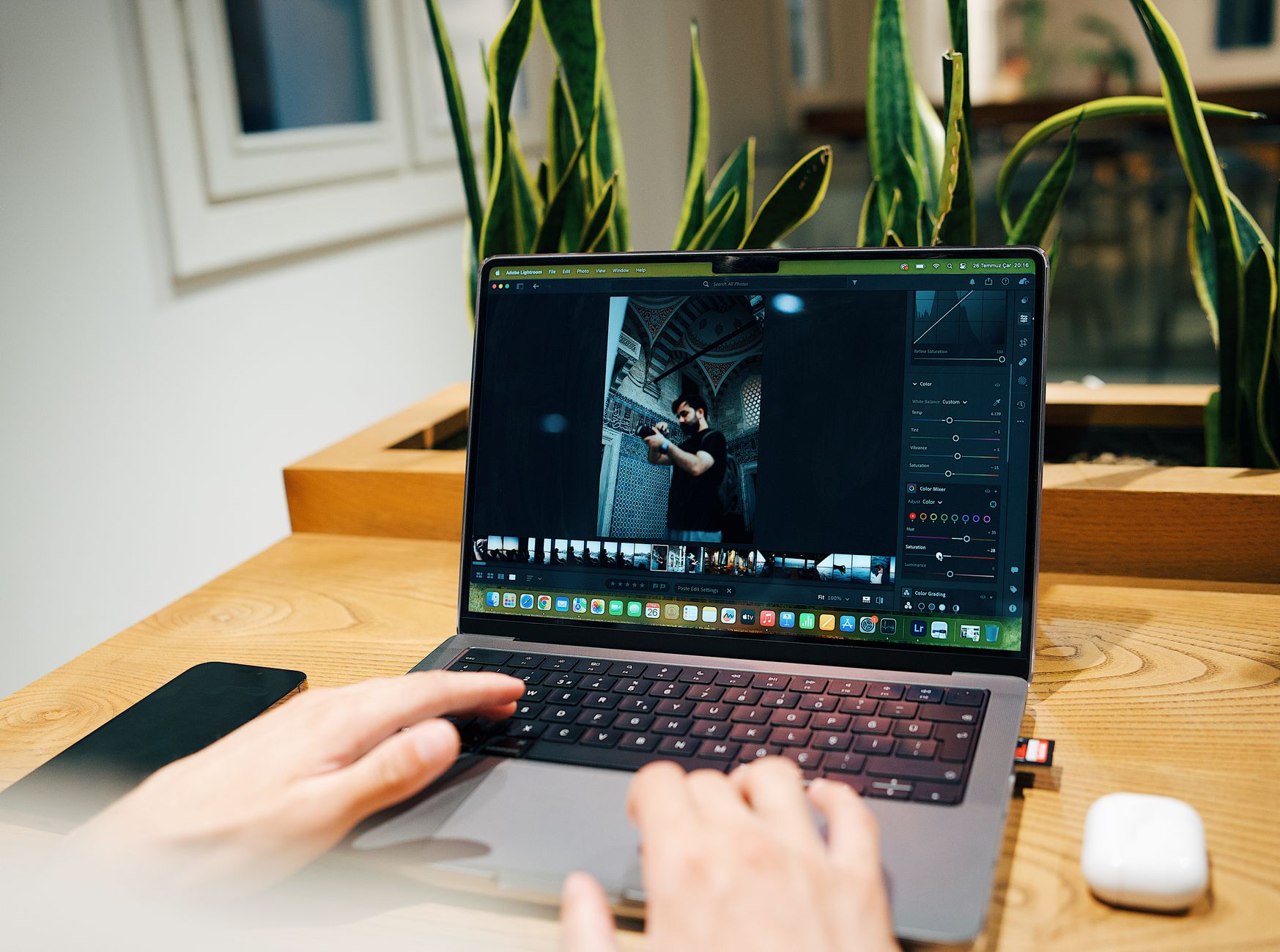
Adobe is bringing more than 70 creative tools directly into ChatGPT, turning the chat window into a workspace for images, documents, and design. This matters if you use Artificial Intelligence (AI) to create content but do not want to open a separate application for every step. At the same time, developments in image generation, music, streaming, and short fiction show why disclosure and provenance must keep pace with convenience.
The creative studio moves into chat
Adobe’s new plugin, an add-on that expands an existing application, gives users access to more than 70 tools, according to the report on the ChatGPT integration. They come from Adobe products including Photoshop, Premiere, Express, Acrobat, Firefly, Illustrator, and InDesign. Rather than merely requesting a new image in text, you can initiate additional production and editing steps without leaving the conversation.
A prompt is an instruction you give to an AI system. For example, you could upload data and spreadsheets and ask the tools to turn them into a formatted PDF. In another concrete use case, several campaign images could be adjusted to share a consistent visual style. This does not automatically make chat a complete replacement for specialized design software, but it gives you one interface for coordinating the work.
That shift matters more than the raw tool count. Beginners can describe a goal in everyday language instead of first locating functions across multiple menus. Advanced users gain a central place for bringing source material, revisions, and results together in stages. The report does not establish whether every included function is equally reliable.
The source also provides no details about prices, required subscriptions, or regional restrictions. The available information therefore does not reveal what complete access would cost in Switzerland or whether every tool will be available there at the same time. Those unanswered conditions will have a direct effect on the integration’s practical value.
More tools mean less application switching
The trend extends beyond Adobe. xAI has released Imagine Image 2.0 as a quality mode on grok.com and in Grok’s iOS and Android apps. According to an analysis of image generator rankings, the faster version placed second behind OpenAI’s GPT-Image-2 in two Arena benchmarks as of August 7, 2026. A benchmark is a comparative test used to assess systems under similar conditions.
In image editing, Imagine Image 2.0 received an Elo score of 1439, compared with 1463 for GPT-Image-2. Elo is a rating system that summarizes the results of direct comparisons. In text-to-image generation, the scores were 1320 and 1380. These rankings offer an indication of perceived quality, but they do not prove that one model is better for every task you might have.
The editing features are more tangible than the ranking. According to xAI, you can modify only a selected part of an image, remove a background, and export a subject with transparency. The system can combine up to five input images. Its resizing feature can also generate missing image areas when you need to adapt an existing landscape image to a different aspect ratio.
Templates cover areas including product photography, marketing material, game assets, and streaming emotes. For a small product presentation, you could combine existing photos, remove their backgrounds, and create several formats. xAI has also demonstrated a feature intended to generate characters, locations, and props in a consistent style. The company presents this as preparation for video production, but that provider claim has not been independently verified.
Roku’s round-the-clock Fairground AI Creator TV channel illustrates why easier video production does not necessarily produce good programming. A review of the AI streaming channel describes a curated but thematically inconsistent sequence of short AI videos. FAST stands for free ad-supported streaming television. The reviewer could follow some of the narratives but found most of the material seen during roughly an hour to be weak short-form content.
Pros and Cons of creative studios in chat
Pros:
- One interface – You can initiate image, PDF, and design tasks from a shared conversational workspace.
- Lower learning barrier – You describe the desired outcome in a prompt instead of first learning a large set of software commands.
- Iterative editing – Selected areas, backgrounds, formats, and styles can be revised in stages without restarting the entire job.
- Broad range of uses – The sources show concrete applications spanning product images, campaign material, music, and short stories.
Cons:
- Unclear costs – None of the reports fully explains which subscriptions or fees are required for the described workflows.
- Uneven quality – A good individual image or readable story does not guarantee a compelling video, song, or broader concept.
- Unclear provenance – Training material, stylistic references, and the human or AI origin of individual elements are not always visible.
- Mass production – Easy generation can fill platforms with interchangeable content and increase pressure on human-made work.
These drawbacks are especially visible in music. Suno is facing criticism after a German court found that it had used copyrighted songs for training, according to a report on its new safeguards. The court also concluded that suitable prompts could reproduce those songs and that the US fair use principle therefore did not apply.
Suno says it did not include artist names in its training metadata and has never allowed prompts requesting particular artists or copyrighted songs. The company also says it works with third-party providers to inspect uploaded audio and lyrics for potentially unauthorized use. These provider statements do not settle the wider dispute, but they show that technical and organizational controls are becoming part of the product itself.
New download rules are also intended to make the large-scale distribution of generated tracks to streaming platforms more difficult without affecting most users. As context, the report cites a man who was convicted in March after uploading hundreds of thousands of AI songs and fraudulently collecting eight million dollars in royalties. A personal track for a private video and industrial-scale automated publishing may be technically close, but economically they are very different activities.
A practical way to get started
For beginners:
Start with a narrowly defined task and material whose origin you know. You might turn your own spreadsheet into a readable PDF or give several product photos you took yourself a consistent style. Then inspect names, figures, image details, and layout separately rather than accepting the result because its overall appearance seems polished.
For stories or music, keep drafting separate from publishing. AI can provide variations, but you should record which source material you used and which parts you edited yourself. Because the sources do not provide consistent pricing details, your first test should also include checking access conditions, export rights, and subscription requirements.
For advanced users:
You can get more from the tools by dividing a job into controllable stages: define style and format, generate variants, edit individual areas, and export only at the end. For images, you can combine references, remove backgrounds, and test multiple aspect ratios. A leaderboard score should at most help you identify candidates; comparison with your own requirements remains more useful.
For recurring professional work, use a consistent review process. Record the prompt, source files, editing stages, and human approval, particularly for campaign material or publicly distributed content. This does not provide conclusive legal certainty, but it makes the production process easier to trace and can expose accidental copying or conflicting versions.
Origin and quality remain unresolved
A study involving more than 2,500 participants shows how strongly disclosed origin can influence judgment. Across three experiments, participants could not distinguish ChatGPT-generated short stories from human-written ones at better than chance level. In the first experiment, 1,682 people each read one of six stories of about 1,000 words; three came from literary journals or collections, while ChatGPT 4.0 generated the other three.
The summary of the study results reports that the AI stories received higher ratings. On a scale from minus 3 to plus 3, their average perceived quality was 1.54, compared with 0.97 for the human stories; immersion scores were 1.42 and 1.00. At the same time, participants rated stories more highly regardless of their actual origin when they were told that a human had written them.
This does not prove that AI generally writes better fiction. The prompts followed the themes, styles, and narrative perspectives of the human examples, and the research examined particular short stories under defined conditions. Instead, the findings show that perceived quality and knowledge about origin are separate influences. A disclosure can alter someone’s judgment even when the content itself remains unchanged.
Music is producing a public version of the same trust problem. Rapper Fenix Flexin initially stated explicitly that no AI had been used on his song “Rubberz.” Later, according to The Verge’s account of the conflicting statements, he wrote that he had never denied using AI and had only separated it from the recording process. A producer had previously alleged that the Treblo tool was involved, while its provider released a detection tool that classified the track as created with Treblo AI.
Such a detection tool is not a substitute for a traceable disclosure from the people involved. The case shows how quickly later explanations can lose credibility when they conflict with earlier statements. Labeling is therefore not just an abstract exercise in transparency; it affects trust among creators, audiences, and platforms.
Chat-based creative tools substantially reduce the effort required for drafts, variations, and edits, and concrete jobs such as PDF design or consistent product imagery can benefit. The examples from music, streaming, and fiction show that technical quality alone guarantees neither originality nor trust. The central unresolved risk is whether platforms can make source material, AI involvement, and human contributions visible before mass-generated content becomes routine.
Sources
- Über 70 Kreativ-Tools integriert: Adobe-Plugin macht ChatGPT zur Canva-Alternative – t3n, 2026-08-07
- xAIs neuer Bildgenerator “Imagine Image 2.0” landet auf Platz 2 hinter OpenAI – THE DECODER, 2026-08-08
- Musikgenerator Suno will den KI-Musik-Spam eindämmen und Copyright-Schutz verbessern – THE DECODER, 2026-08-07
- Fenix Flexin isn’t even denying using AI to make ‘Rubberz’ anymore – The Verge, 2026-08-07
- Watching Roku’s AI channel is like eating from a trough – The Verge, 2026-08-07
- Leser bewerten ChatGPT-Geschichten höher als menschliche, bis sie die KI-Herkunft erfahren – THE DECODER, 2026-08-08


Image: iam hogir via Pexels