
Google is introducing Gemini Enterprise for Legal, an Artificial Intelligence (AI) product intended to review contracts, support legal research, and track regulatory changes for law firms and legal departments. The development reaches beyond legal professionals because similar systems are already changing research, medicine, personal finance, and digital office work. For you, the useful question is therefore less whether AI replaces entire professions and more which tasks it takes over and where human responsibility remains.
What work can AI already take on?
The report on Gemini Enterprise for Legal explains that Google’s model connects to legal systems including iManage, NetDocuments, DocuSign, Everlaw, RelativityOne, and Thomson Reuters HighQ. The specialized AI service Harvey is connected as well. The platform inherits access permissions from those systems and is intended to summarize contracts, retrieve legal information, and monitor changes in regulations.
These connections use connectors, technical bridges between AI and existing data sources. Prebuilt AI agents, programs designed to complete multistep tasks, can produce contract summaries, for example. Anthropic is pursuing a similar approach with plugins, prepared instructions, and skills for particular professional tasks. The underlying models remain the same as those in the providers’ general products; much of the added value comes from professional templates, access to data, and integration into existing workflows.
According to Google, the legal product is initially available as a preview, meaning an early version. A comparable product exists for finance, while versions for health care and life sciences are expected to follow. The supplied report gives no price. Users therefore cannot yet tell how widely the product will be offered or what costs may arise in addition to existing professional systems.
Where does faster work provide a concrete benefit?
In User Experience Research (UX Research), the structured study of how people experience products and services, AI can transcribe interviews, sort responses, condense material, identify patterns, and draft initial personas. A professional article on UX research says that work that once took days can sometimes be completed in hours. One practical workplace example is a series of user interviews: AI produces transcripts and groups recurring statements, while researchers determine whether those groups make sense in context.
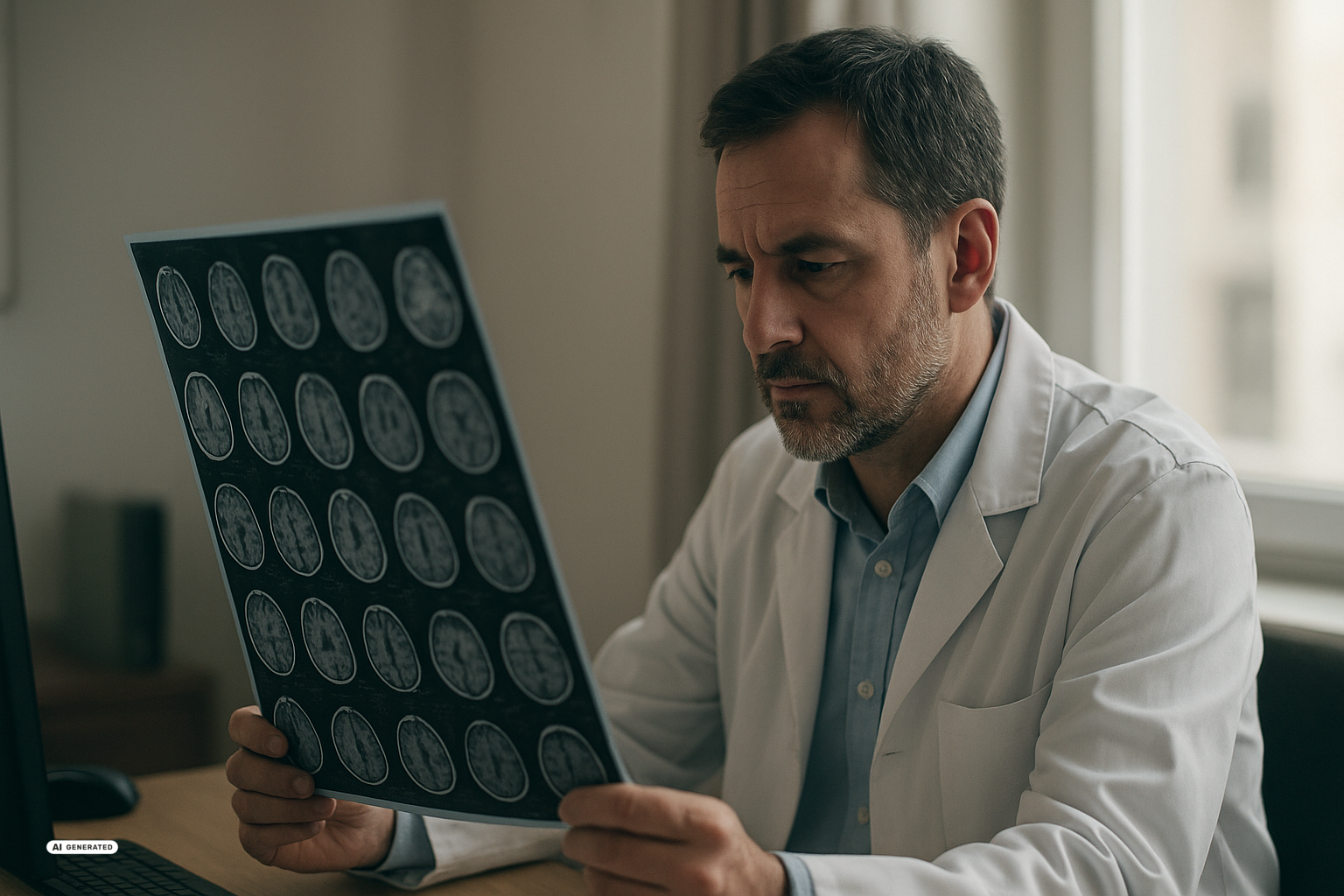
In radiology, the medical interpretation of images, AI tools can draft reports or prioritize scans that may require urgent attention. At the beginning of 2026, roughly three-quarters of the 1,400 AI-enabled medical devices cleared by the US Food and Drug Administration were for radiology, according to Ars Technica. An analysis of 43 clinical trials also found that AI-assisted colonoscopies detected more polyps than conventional procedures.
This matters because estimated average human error rates for diagnostic imaging range from 3 to 5 percent, translating into about 40 million errors worldwide each year, according to the report. Yet “machine more accurate, human unnecessary” is far too simple an equation. The analysis of radiology and AI notes that the profession is expected to grow by at least 26 percent over the next three decades. AI is substantially changing the work, but the development described so far does not amount to replacement of the entire profession.
Links to personal data are also becoming more tangible in everyday finance. Scalable Capital allows users to connect ChatGPT, Claude, or Grok to their accounts and investment portfolios. You can use a chatbot to analyze holdings and transaction histories, create a sample portfolio or a newsletter about securities on your watchlist, and prepare an order. Every purchase or sale still requires your confirmation; cost information and risk notices appear before execution, followed by notifications.
Why does human judgment remain essential?
The examples share a pattern: AI is particularly effective at sorting, comparing, summarizing, and checking. It is weaker when someone must first define the right problem, interpret an unusual observation, or accept responsibility. In UX research, a quickly generated summary does not repair an unclear research question. Weak methods and poorly structured data are merely processed faster.
The same limitation applies to medical and legal decisions. A highlighted area on a scan is not a complete diagnosis, and a contract summary is not a dependable legal assessment. The sources describe systems that support professionals rather than reliably transferring total responsibility to a machine. Results therefore require review in their professional context, particularly when health, rights, or money are involved.
The quality of the digital workplace matters as well. An article about AI in the digital workplace points to scattered knowledge, inconsistent standards, unclear responsibilities, and filing systems shaped by years of ad hoc decisions. AI operates with the information, processes, permissions, and rules that already exist. It can expose organizational disorder, but it does not automatically convert that disorder into reliable knowledge.
This is particularly relevant in Switzerland because the article mentions the Swiss Financial Market Supervisory Authority (FINMA) and Swiss Bankers Association (SBA) guidelines alongside foreign regulatory frameworks. Organizations need transparent rules covering which data a system may read, who is responsible for its outputs, and how use is monitored. The sources do not specify whether the professional products described are available in Switzerland’s national languages.
Pros and Cons of AI as a professional assistant
Pros:
- Time savings – AI can substantially accelerate transcription, summarization, research, and initial report drafts.
- Prioritization – In radiology, AI can flag urgent scans and help professionals handle large workloads.
- Access to data – Integrated assistants can make information from professional systems or an investment portfolio available through conversation.
- Standardization – Prepared workflows and templates can make recurring reviews more consistent.
Cons:
- Incorrect judgments – A plausible or technically precise output can still be interpreted incorrectly in a particular case.
- Data exposure – Professional systems often contain confidential legal, medical, research, or financial information.
- Dependence on foundations – Unclear permissions, poor data, and weak methods limit reliability.
- Fewer learning opportunities – Automating basic entry-level tasks can remove part of the practical experience once available to new workers.
What does this mean for entry-level work and training?
The final drawback is more than a theoretical concern. An updated Stanford analysis found that employment among workers ages 22 to 25 in the occupations most exposed to AI was 19 percent lower than among peers in less exposed fields. The gap had been 13 percent the previous year. Across the economy as a whole, however, the researchers found little to no relative employment difference between occupations rated as highly and minimally exposed.
These figures conflict with a broad story of an immediate economy-wide jobs collapse, but they indicate a specific risk at the start of a career. Routine work such as initial summaries, basic analysis, and preliminary research has traditionally provided practice for younger employees. If it is automated, employers need other ways for new workers to build professional judgment, understand context, and learn to carry responsibility.
Educational institutions face a similar task. At Cheshire Academy, a Connecticut boarding and day school with about 400 students, teachers use a mixture of general and specialized AI tools without being required to adopt one particular product. Staff training focuses on useful prompts, meaning instructions given to a model, as well as limitations such as incorrect and biased responses. Teachers use generative AI, which produces new content, for lesson plans and grading rubrics, while concerns about quality, personalization, and privacy have held back its use for individualized feedback.
The report on smarter classroom AI policies illustrates a pragmatic approach: teach transferable techniques instead of training staff on only one tool. For professional development, that means learning to define tasks clearly, inspect outputs for errors and bias, and avoid carelessly sharing confidential data. Professional knowledge does not become less relevant; it becomes the basis for meaningful oversight.
What does this mean for your own work?
If you are a beginner, start with a narrowly defined and reversible task. You might have an anonymized interview transcribed and organized by theme, or ask an approved system to summarize an existing document. Compare the output with the original, mark omissions, and check whether the categories genuinely fit the research question. This gives you practical knowledge of both benefits and failure patterns without immediately delegating a medical, legal, or financial decision.
If you are more advanced, you will gain more by reviewing the entire workflow rather than concentrating only on the prompt. Clarify data sources, access permissions, quality checks, and the person who approves the result. Document which parts came from AI and where human judgment changed or rejected its output. With connected professional systems, this process design is often more important than producing an especially polished instruction.
AI is shifting professional work away from pure production and toward selection, review, and interpretation. The applications described can save substantial time and, in some medical tasks, reveal additional abnormalities, but their quality still depends on data, methods, and human oversight. The unresolved risk is not limited to false answers or sensitive data: automating entry-level work may also shorten the learning paths through which future specialists develop judgment.
Sources
- Googles neue KI-Lösung für Kanzleien soll Vertragsarbeit und Rechtsrecherche automatisieren – Unknown, 2026-08-25
- KI im UX Research: starkes Werkzeug, kein Ersatz – Unknown, 2026-08-26
- AI won’t replace radiologists, but it will dramatically change their jobs – Unknown, 2026-08-25
- Scalable Capital öffnet Depot für ChatGPT, Claude und Grok: Was die Chatbots dürfen – und was nicht – Unknown, 2026-08-25
- KI wird zum gnadenlosen Auditor des Digital Workplace – Unknown, 2026-08-25
- AI is hitting entry-level jobs hardest, Stanford study finds – Unknown, 2026-08-24
- How to encourage smarter AI use in the classroom – Unknown, 2026-08-24