



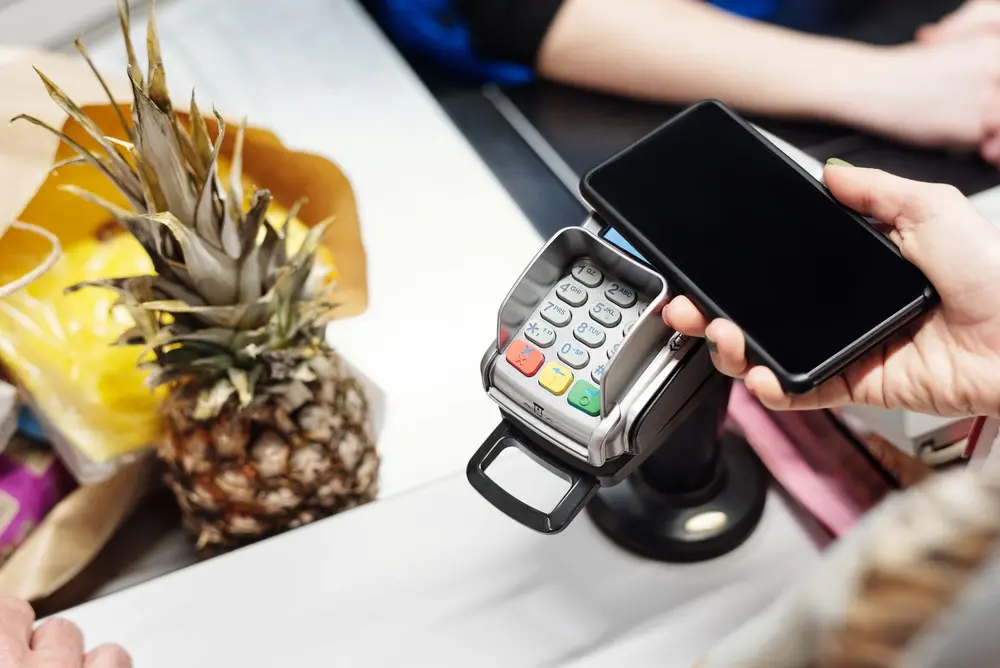
ChatGPT Wallet is designed to let AI agents complete purchases on behalf of their users. It initially affects adult ChatGPT Pro subscribers in the United States, but it may illustrate a broader shift in shopping assistants: instead of merely recommending products, they can initiate payments. The available information gives no launch date or confirmed availability for Switzerland.
The wallet turns an assistant into a buyer
OpenAI describes ChatGPT Wallet as a secure payment method for agents in ChatGPT Work, Codex, and Dots. An agent is a system based on Artificial Intelligence (AI) that performs multistep tasks for a person rather than only answering questions. According to OpenAI’s brief announcement, the protections attached to the existing card are meant to remain in place.
The more detailed reports focus on Dots, OpenAI’s platform for personal AI agents. This leaves the exact scope somewhat unclear: OpenAI names several products, while launch coverage mainly describes access through Dots. The Verge presents the feature as rolling out to eligible Pro subscribers, whereas TechCrunch says it will initially reach a limited number of them. Both accounts say users must be at least 18, have a U.S. billing address, and hold an eligible U.S.-issued card.
You add a card to the wallet once. A Dot can then assist with a shopping task, choose a product, and prepare the checkout. Before completing the transaction, the system displays the items, total amount, and selected card; each purchase currently requires a security check using facial recognition or a fingerprint. TechCrunch says that this verification also creates a record of the transaction.
This is OpenAI’s second attempt to move directly into online commerce. Its earlier Instant Checkout approach was dropped because it lacked flexibility, according to The Decoder’s account of the relaunch. Competitors including Anthropic, Meta, and Google are also developing agents that can take on shopping tasks.
Demand remains uneven. TechCrunch reports that DoorDash and Uber have so far recorded low numbers of orders placed by AI agents. At Meta’s Muse, which has more than 10 million users, AI-assisted shopping has reportedly become one of the app’s leading activities. These company figures reveal little about the reliability or long-term use of such purchases, but they do show the commercial pressure behind the trend.
This is how a ChatGPT Wallet purchase works
Step 1: Add an eligible card
- Add an eligible U.S. card to the wallet as a one-time setup.
- Check which card has been selected for the specific purchase.
The supplied sources do not name a separate fee for the wallet. Access does, however, require a paid ChatGPT Pro subscription at launch. Users in Switzerland cannot complete this first step for now because the service requires a U.S. billing address and an eligible U.S. card.
Step 2: Give the agent a shopping task
- Describe the product you want and the conditions it must meet.
- The agent researches offers, assists with the choice, and prepares the cart.
A study of AI shopping provides a concrete example: prompts asking where to buy brands such as Birkenstock or Le Creuset. The researchers also asked which sites sold a brand and whether it shipped internationally. These tasks sound straightforward, but they depend on current and accurate merchant information.
Step 3: Check the offer and the merchant
- Review the items, final amount, delivery terms, and store name.
- Compare the displayed web address with the brand’s or retailer’s official site.
This check is more than a formality. A study conducted by brand-protection company Podqi and provided to The Verge found links to fake stores, reregistered old domains, and inactive sites in responses from ChatGPT, Gemini, and Perplexity. Across 6,795 answers, addresses classified as risky appeared in up to 15 percent of cases depending on the system; Perplexity performed worst at 15 percent.
The study has limitations: Podqi used its own test prompts covering 151 brands rather than real user conversations. Even so, the test of risky retail recommendations shows that a confident response is not a substitute for verifying a seller. A cart is no more trustworthy than the sources used to fill it.
Step 4: Explicitly approve the payment
- Review the items, final amount, and payment card once more.
- Confirm the purchase with facial recognition or a fingerprint.
OpenAI says the payment uses a payment token, a substitute number with its own security code rather than the real card details. This is intended to prevent both the agent and the merchant from receiving the actual card number. The seller still receives information needed to fulfill the order, including the shipping address and contact details. Tokenization therefore reduces one particular payment risk, but it does not make the overall purchase anonymous.
OpenAI expects users eventually to delegate purchases completely within preset boundaries, such as spending limits, product categories, or time periods. No date is given for this capability. The distinction would be significant: today you authorize every transaction, while a future purchase might be covered by a broader rule approved in advance.
Merchants and airlines set their own limits
ChatGPT Wallet will not necessarily work on every website. Retailers can restrict AI agents or block them entirely; Amazon, for example, previously blocked Meta’s Muse. OpenAI says websites must support agents for the payment process to work. Having a card in the wallet is therefore no guarantee that a particular store will accept the agent.
The conflict is especially visible in air travel. United Airlines is restricting AI-agent access to bookings and reservations. The airline cites cybersecurity, unintended purchases, account changes, and the possible use of MileagePlus miles among its concerns.
A practical example would be an agent using your credentials to book a flight or modify an existing reservation. Sharing passwords with an assistant can expose sensitive information if those credentials are leaked. United also points to aviation rules that require a human to complete check-in and acknowledge that no prohibited items are in their bags. According to the same report, Bank of America has also warned customers not to share passwords with AI assistants.
The dispute is not simply about technical compatibility. Companies need to distinguish among a real customer, an authorized agent, and an unwanted automated system. They must also determine who is responsible for incorrect entries, accidental bookings, and compromised accounts. Biometric approval of a payment does not resolve those issues outside the checkout itself.
Access to product data is becoming strategic as well. Amazon reportedly plans to build a “World Product Graph” containing information about products from across the internet, including items Amazon does not sell. The proposed product database is intended to keep both people and AI agents within Amazon’s orbit; links to outside sellers have already appeared through its “shop direct” feature.
An internal Amazon document reportedly acknowledges that many answers from its Rufus shopping assistant are factually wrong or incomplete and that running searches with AI is expensive. More product data is supposed to improve accuracy and efficiency. It also introduces another source of influence: if agents rely mainly on one large centralized index, that index helps determine which merchants and products become visible.
Pros and Cons of AI-assisted shopping
Pros:
- Fewer separate steps – An agent can combine research, selection, cart preparation, and checkout setup in one process.
- Approval before purchase – You see the items, total, and card before biometrically authorizing the current transaction.
- Protected card details – A payment token replaces the real card number when dealing with the agent and merchant.
- Defined boundaries – Future spending limits, categories, and time periods could constrain delegated purchases, although this capability is not yet available.
Cons:
- Unreliable recommendations – Chatbots can direct shoppers to fake, outdated, or inactive retail sites.
- Additional data flows – Shipping and contact details still reach the seller, while credentials shared with other agents can create further exposure.
- Limited acceptance – Stores, airlines, and other providers may block agents or prohibit particular actions.
- Unclear responsibility – A mistaken purchase or account change can blur the boundary among the user’s instruction, an agent error, and the merchant’s obligations.
The design of the sales environment adds another concern. The European Union’s planned Digital Fairness Act targets manipulative purchase prompts, inadequate price transparency, subscription traps, and AI agents that shop independently. The regulatory approach described by t3n therefore covers not only familiar tactics such as artificial scarcity or countdown timers, but also future automated purchasing decisions.
No specific obligation for Switzerland can be inferred from this material. Swiss users may still encounter European stores and platform policies, while the wallet itself is not included in the initial launch. The sources also provide no details about the privacy conditions that would apply if the service were later introduced in Switzerland.
What this means for you
If you are a beginner, treat a shopping agent as a research tool rather than an independent buyer. For a task such as finding an international seller for a particular brand, verify the web address, final price, and delivery terms outside the agent’s summary. Do not share an account or airline password simply because an assistant promises to remove another step.
If you have more experience, you can get better results by defining the request precisely: set the product category, price ceiling, permitted retailers, and required delivery terms before the search begins. If delegated purchasing becomes available, narrow spending and time limits would be safer than blanket approval. Separate transaction reviews would still be useful because a technically correct payment can be based on a faulty recommendation.
ChatGPT Wallet brings product search and payment closer together without fully removing human responsibility. Tokenized card details and biometric approvals protect the payment step, but not against questionable recommendations, deceptive stores, or overly broad account access. The unresolved risk lies less in the digital wallet itself than in the sources, websites, and permissions the agent trusts along the way.
Sources
- Introducing ChatGPT Wallet – OpenAI, 2026-11-13
- ChatGPT Wallet lets OpenAI’s Dots agents make purchases for you – The Verge, 2026-11-13
- OpenAI startet mit der ChatGPT Wallet einen zweiten Anlauf beim KI-Shopping – The Decoder, 2026-11-13
- ChatGPT’s new Wallet lets AI agents shop and check out for you – TechCrunch, 2026-11-13
- AI chatbots are recommending fake retail websites, study finds – The Verge, 2026-11-12
- United Airlines blocks AI agents from booking flights, citing cybersecurity risks – TechCrunch, 2026-11-12
- Digital Fairness Act: Wo die EU künftig die Grenzen des Online-Marketings zieht – t3n, 2026-11-13
- Amazon has a plan to index the world’s online shopping data – The Verge, 2026-11-13


Image: Jack Sparrow via Pexels