



New Artificial Intelligence (AI) features can make your phone read fine print, visualize clothing on your body, or offer feedback on videos. They could help people with low vision as well as online shoppers, creators, and small merchants. Several services are arriving at once, but some are not broadly available or independently tested yet.
What you can try with cameras and shopping
Google is introducing Guided Vision as a camera assistant inside Gemini Live. On compatible Android devices, Gemini describes whatever you point your camera at in real time. It can read small text, find or identify objects, and describe details in your surroundings.
One practical example from the report on Guided Vision starts with finding a particular product. After Gemini identifies it, you can ask the assistant to read the printed expiration date. If the relevant area is outside the frame, Google says spoken cues will help you position the camera correctly. Follow-up questions refer to the same camera view, so you do not need to describe everything again.
Guided Vision is primarily designed for people who are blind or have low vision. It is also available through Google’s TalkBack screen assistance and through an accessibility shortcut on devices running Android 9 or later. Google explicitly warns against using it for navigation, safe-travel guidance, or obstacle detection, and says it is not a replacement for a cane or another mobility aid.
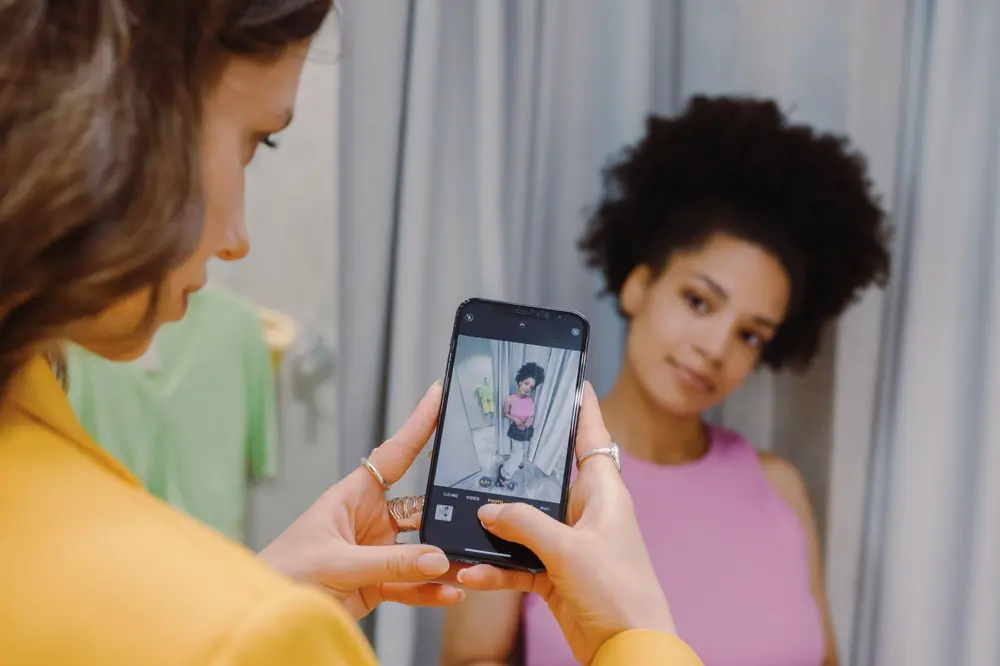
ChatGPT, meanwhile, is adding a globally launched virtual try-on feature to its shopping results. You upload a selfie or full-body photo to generate a visualization of how clothing or an accessory could look on you. You can also submit a product image or screenshot. A Favorites option stores products and generated try-on images in your library.
According to OpenAI, the feature uses its ChatGPT Images 2.5 model, which is supposed to produce more natural lighting and textures while following editing instructions more reliably. These provider claims have not been independently verified in the supplied material. The output is also a generated preview, not dependable evidence of fit, fabric behavior, or actual sizing.
What creators and merchants get
Ideogram 4.5 targets a recurring problem in AI image editing: when a model changes one part of a picture, it may unintentionally alter faces, body shapes, or backgrounds as well. According to the provider, the new model should keep unedited areas stable. Early testers reportedly found its edits highly consistent, although the source does not provide a comprehensive independent evaluation.
This could be useful in product photography. A merchant might change the color of a garment without also changing the model’s body or the background. Other examples named in the report include interior design, photo restoration, and editing text inside images. Ideogram 4.5 works at native 2K resolution and offers four quality levels costing between 0.8 and 22 cents per image.
Shopify takes a different route with Canvas. Merchants describe the store they want in a chat, and the AI assistant Sidekick carries out the changes. Canvas displays the evolving result in real time, lets users zoom into particular areas, and, according to Shopify, renders the working store rather than a static preview.
That allows merchants to test interactions, animations, and layouts for different screen sizes. You can still click individual elements and edit them directly if you prefer. Canvas extends Shopify’s existing no-code builder, meaning a tool that does not require programming, where deeper customization could previously demand code or outside specialists. The source gives neither a price nor specific regional availability details for Canvas.
What assistants do with data and routines
Meta is adding an assistant to its Edits video app that analyzes data from your Instagram account. It can use views, audience retention, shares, likes, and comments. You might ask why one short video drew fewer views than earlier posts, then request ideas for new concepts, opening hooks, captions, music, or scripts.
The analysis inside Edits also compares historical performance with current Instagram trends and general audience preferences, according to the report. This can spare creators from manually reviewing numerous metrics. It also means the platform is moving beyond measuring what worked and toward recommending what users should produce next.
A second account highlights the risk in that shift. If many creators receive similar data-driven recommendations, their content could become more alike and more closely aligned with the platform’s priorities. The Verge also points to comparable YouTube features, including AI editing and A/B testing, which compares different versions of the same content.
Google is separately rolling out Skills worldwide in Gemini. A Skill is a saved set of detailed instructions for a recurring task. You can call one by typing a slash and its name, ask Gemini to create it from previous conversations, or let Gemini run it automatically when an input matches.
Skills can include text documents, Portable Document Format (PDF) files, and images as references. Google says users can combine multiple Skills, such as one for writing style and another for brand guidelines. They will gradually replace Google’s existing Gems, which will be converted automatically. Sharing features and connections to Google Drive and Gemini Notebook are due later rather than at launch.
The most experimental development is Griffin from Tavus. The company calls it a Human Interaction Model (HIM), meaning a model intended to handle human-like interaction. It is designed to process speech, facial expressions, tone, gestures, and pauses during live video conversations. Tavus suggests tutoring, practicing difficult conversations, and camera-based technical support as possible uses.
In a provider study, 48 percent of participants reportedly thought Griffin was human after a one-minute conversation, while previous systems reached no more than two percent. A test described by Tavus as independent and conducted by Nvidia gave Griffin 3.83 points for human-like interaction, compared with 3.92 for people and 2.80 for the previous leading AI model. These figures come from provider information and cannot be independently verified from the supplied sources. Griffin-Lite is currently only a preview for selected testers.
Pros and Cons of the new everyday AI
Pros:
- Practical assistance – Guided Vision can make small text and nearby objects more accessible when it is not treated as a safety system.
- Faster drafts – Virtual try-ons, stable image edits, and chat-based store building shorten the path from an idea to a visible version.
- Simpler analysis – The Edits assistant translates numerous performance metrics into understandable answers and suggestions.
- Reusable workflows – Gemini Skills save instructions for recurring tasks instead of making you enter them again each time.
Cons:
- Consequential errors – Camera descriptions, generated previews, and conversation assistants may sound convincing even when their output is wrong.
- Sensitive information – Selfies, full-body photos, camera feeds, account data, and conversation videos can contain personal details.
- Platform dependence – Instagram recommendations and Shopify store designs operate within the rules and commercial interests of their providers.
- Unclear availability – Some features require compatible devices or selected-test access, while several reports omit pricing and country details.
What this means for your work and Switzerland
For beginners: Start with a task whose outcome you can verify easily. You could ask Guided Vision to read clearly visible packaging, test a virtual try-on with a non-sensitive photo, or use Ideogram to change only the color of one object. Compare the output with the original, and avoid uploading images that show private documents or other people.
For advanced users: Repeated tasks and controlled comparisons offer more value. You could save a Gemini Skill for regular writing work, inspect a sequence of image edits for unintended changes, or compare the Edits assistant’s advice with the original account metrics. When building a store, test not only its appearance but also its interactions, animations, and behavior across screen sizes.
Several practical questions remain unanswered for users in Switzerland. ChatGPT describes the virtual try-on as a global launch, while the supplied reports do not clearly establish Swiss availability for Guided Vision, Canvas, Edits, or Ideogram. They also provide no solid details about performance in German, support for Swiss language variants, or where uploaded images and videos are stored.
Those gaps matter if you use customer data, account analytics, employee photos, or educational material. The sources do not provide enough information for a privacy-law assessment. Schools, businesses, and nonprofit organizations should also note that Gemini Skills for Workspace accounts are scheduled to arrive only in the coming weeks.
These features make AI more tangible because they do more than generate text: they observe, design, analyze, and respond through video. They are most convincing when the task is narrowly defined and you can check the result; the balance is weaker when safety, sensitive media, or unverified provider metrics are involved. The unresolved risk is less one spectacular failure than gradual trust in suggestions, images, and statistics that look plausible without necessarily being correct.
Sources
- Google’s new Guided Vision feature can help you read the fine print – The Verge, 2026-10-01
- ChatGPT can now virtually try on clothes for you – TechCrunch, 2026-10-01
- Ideogram 4.5 verspricht stabile KI-Bildbearbeitung ohne ungewollte Veränderungen – THE DECODER, 2026-10-01
- Shopify debuts Canvas, a way to build online stores by chatting with AI – TechCrunch, 2026-10-01
- KI für Instagram-Reels: Meta veröffentlicht Analyse-Assistenten für die Edits-App – t3n, 2026-09-30
- Instagram is adding an AI ‘assistant’ to tell you how to post – The Verge, 2026-09-30
- Google ersetzt Gems durch Skills und folgt damit OpenAI und Anthropic beim neuen Prompt-Format – THE DECODER, 2026-09-30
- Tavus stellt mit Griffin ein KI-Modell vor, das Videogespräche fast so menschlich führt wie ein Mensch – THE DECODER, 2026-10-01


Image: Ron Lach via Pexels